

Catherine Sawoski
Latest articles
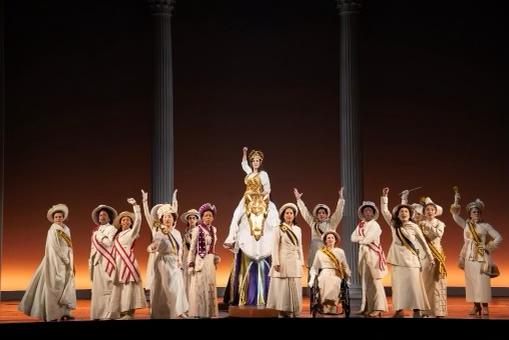
Produced by Jill Furman, Business ’97, “Suffs” chronicles the struggle of the suffragist movement to secure women’s voting rights in 1920. The story follows Alice Paul, famous women’s rights activist, as she leads a radical, young group of trailblazers who are willing to do near anything to achieve their goal—whether it be getting arrested or going on a hunger strike.

Kevin Donnellon, a young disabled boy, raises his small hand in class. We hear his mom speaking to the camera, palms clasped, thinking about what his future holds. “He’ll never be able to get married,” she says, matter of fact. “He’ll never be the father of children.” She never explicitly says that her son won’t be able to have a normal life, but the subtext is clear – being disabled is, for her, a life over before it’s even begun.
A week before opening, the creative team of “Bacchae” had no place to perform. And with a fully functioning bar? That was going to be a problem.

The Varsity Show, Columbia’s longest theatrical tradition, returned for its 129th year this weekend in the Roone Arledge Auditorium. This year’s show, called “Transfer of Power,” chronicled a new type of Columbia cheating scandal and succeeded in making the individual experience of a Columbia student feel universal, elevating the most minute moments of college life into elaborate song and dance. The entirely student-written production featured songs by Malcolm Toleno, CC ’23, with lyrics written by Ava Roberts, CC ’25, and a book by Katy Haden, CC ’23, and Julian Gerber, CC ’24. Rip-roaringly funny and packed with fast-moving humor, The Varsity Show continues to be a source of delight for the entire Columbia community.
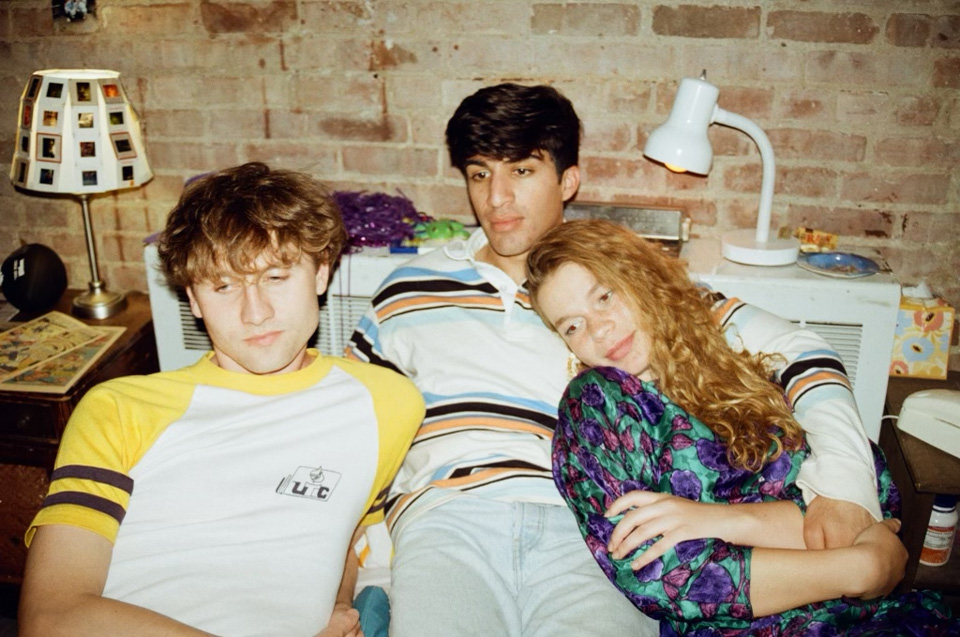
A 19-year-old walks into the apartment with a backpack, weed, and a suitcase full of antique toys.
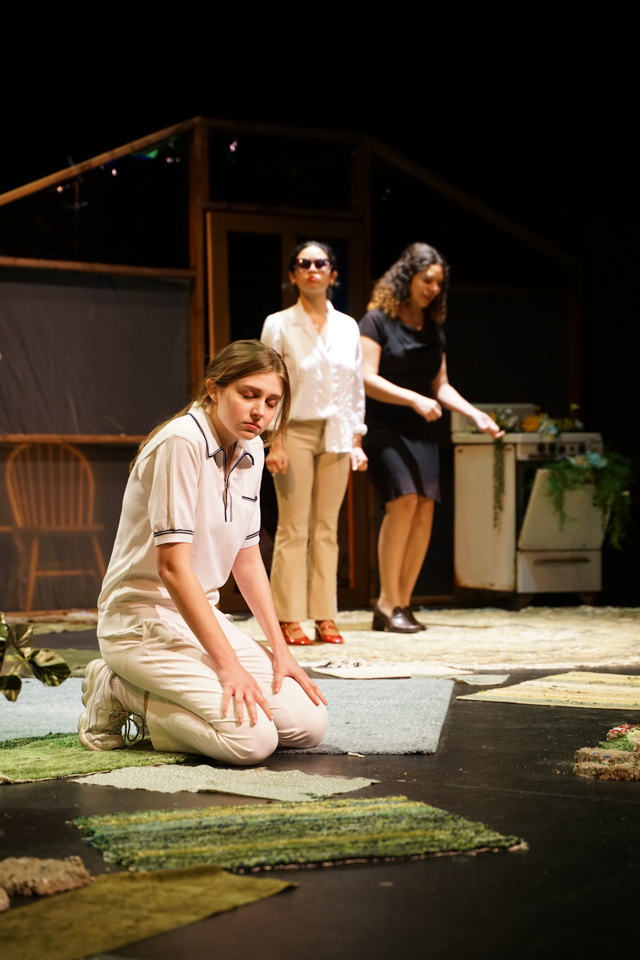
Editor’s Note: This review deals with topics of struggles with mental health. Information about Columbia’s Counseling and Psychological Services can be found here, and about Barnard’s Rosemary Furman Counseling Center here. Students on- and off-campus may contact the CPS clinician-on-call, available 24/7, at (212) 854-2878. A full list of Columbia’s health and well-being resources can be found here.
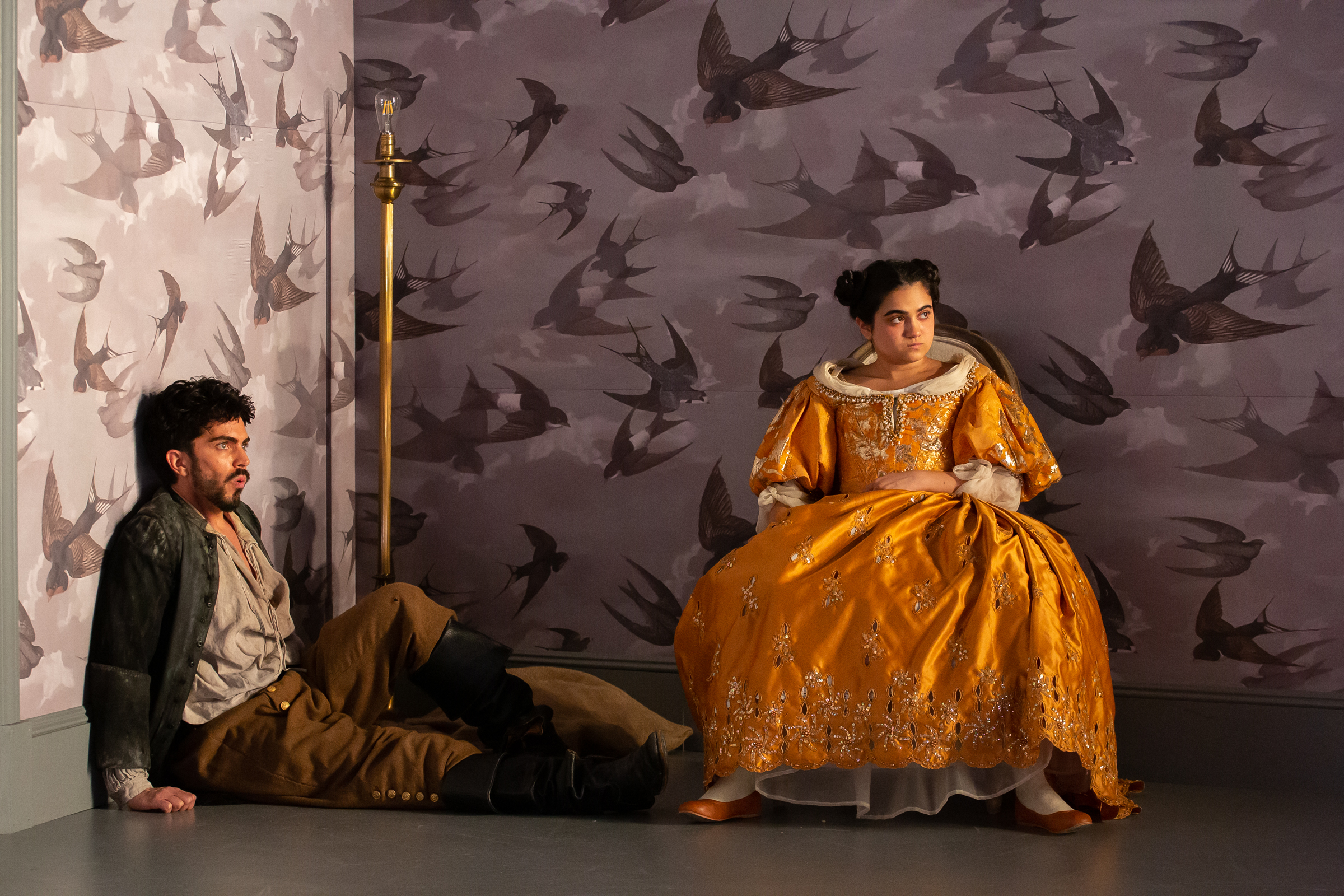
A single window on stage left is our entire connection to the outside world. Covered by a thick wooden pallet, a few slats of light are emitted like prison bars on the stage. A small figure is illuminated by the light of a single bulb, hands gripping the side of a golden dress held above the actor’s head, keeping her face from view. For the first of few times throughout the show, a young girl speaks directly to the audience, conjuring visions of death and rot as we enter into two hours of confinement.
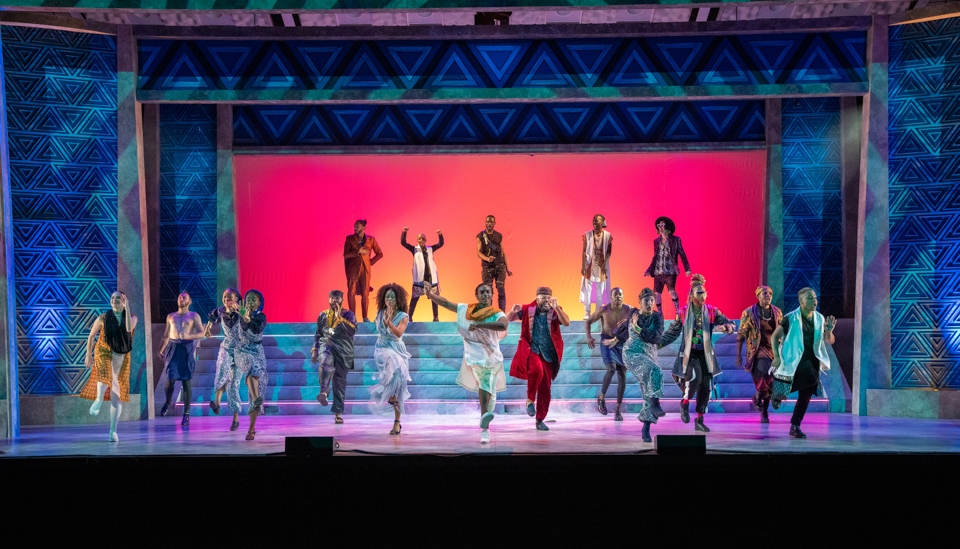
When Shakespeare declared “if music be the food of love, play on,” one scarcely could have imagined he was thinking of the kind of electronic beat you would find at a rave. And yet, this week at the Classical Theatre of Harlem, peppered amidst neon fishnets as the Duke dons a VR headset, one would have assumed it was the feast steaming in his mind all along.
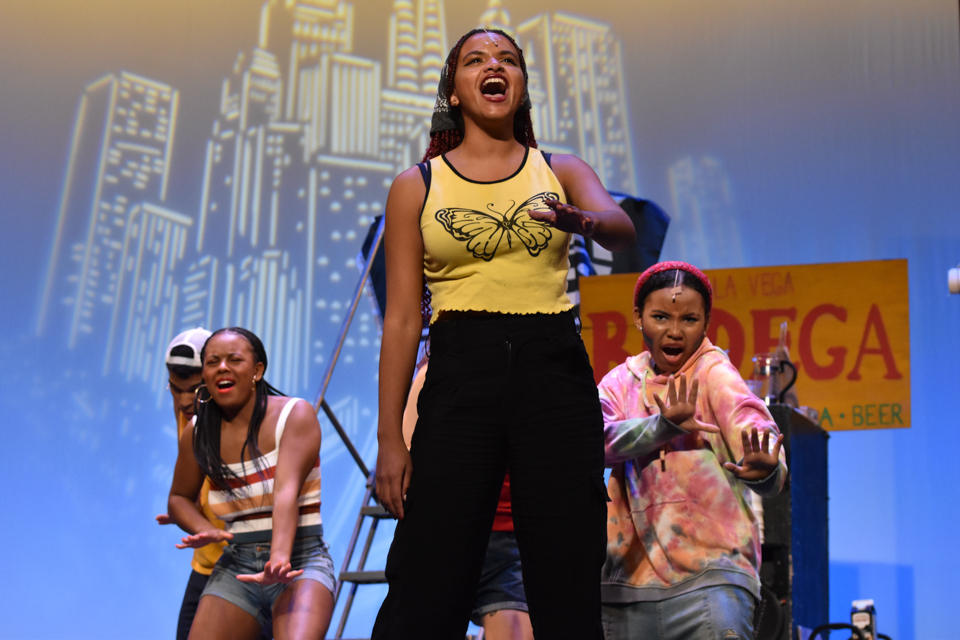
As the audience falls silent, the sounds of street life populate a stage of salon awnings and graffitied trash cans. Construction, traffic, and a changing radio station play out in the cacophonous melody of the city as bodega owner Usnavi appears to chase a vandal off. Urban noises are interrupted by the sharp staccato of two drumsticks beating together. Monumentally, Usnavi does not begin to sing—instead, when he opens his mouth, it is in an intricate rap, layering rhyme over rhyme just as complex as the Washington Heights community itself.

As the lights fade out, five girls huddle together on a pile of hastily stacked mattresses. They overlap, one blending into another in a mass of limbs and embraces. The space around them is filled with walls covered in polaroids, posters, drawings, scraps of fabric, and other universal relics from teenage life. Looking at the girls, still dressed for the camp dance, one would never guess the unnerving thoughts we’ve seen going through their minds. Just a few moments before, the same crowded cabin was a stage for interpretive dance, with one of the very girls twisting and reaching in an expression of guilt and lament.