

Jane Loughman
Latest articles
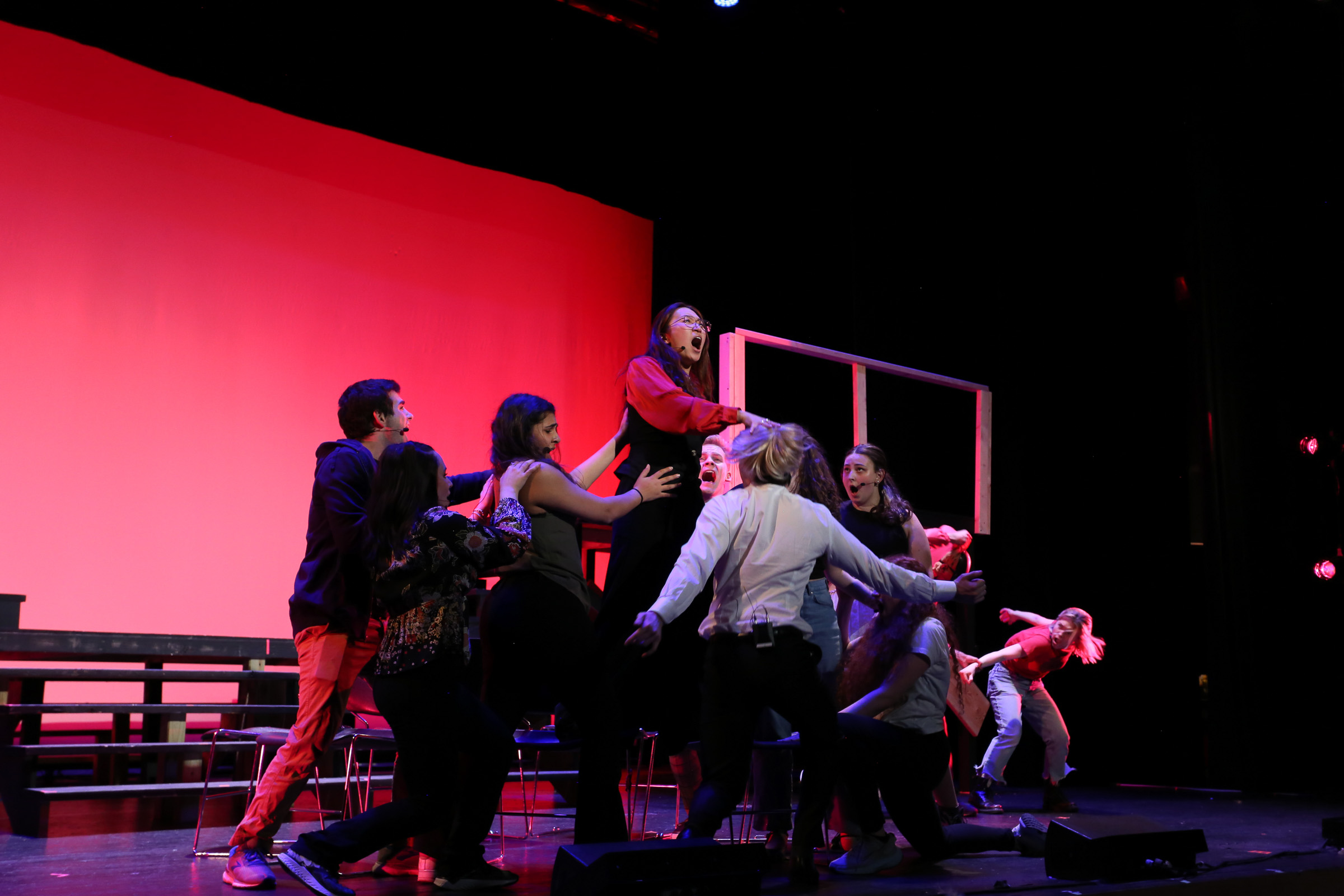
The curtains draw back to reveal a big screen projecting the ever-so-familiar Zoom meeting grid. A burnt-out professor reprimands his students for leaving their cameras off. He ignores the keen first-year Alexa and picks on the nervous SEAS student Andy. Edith struggles to unmute herself, and Chett is unknowingly unmuted as he complains about the class.

Jackie Kennedy grieves her famous husband in her blood-stained pink suit. Lord Byron ponders procrastination in a red velvet blazer and dazzling necklace. A man in a gray blazer, brown trousers, and a black tie imagines what it would be like to have a dead girlfriend. These are three characters across three different plays shown in one evening. Despite their contrasting premises, one thread ties them all together: they each explore the rise from the ordinary to the extraordinary and the fall from the extraordinary to the ordinary.

Maia Castro-Santos, CC ’25, stands opposite Ry Spada, CC ’24, holding up a hula hoop. Castro-Santos hands Spada a tissue through the hula hoop, who then wipes her tears with the tissue—Castro-Santos mirrors her every movement. They separate, Castro-Santos threading the hula hoop through her own body and moving away to give space to Spada. As Hamlet, Spada begins the well-known Shakespeare speech:
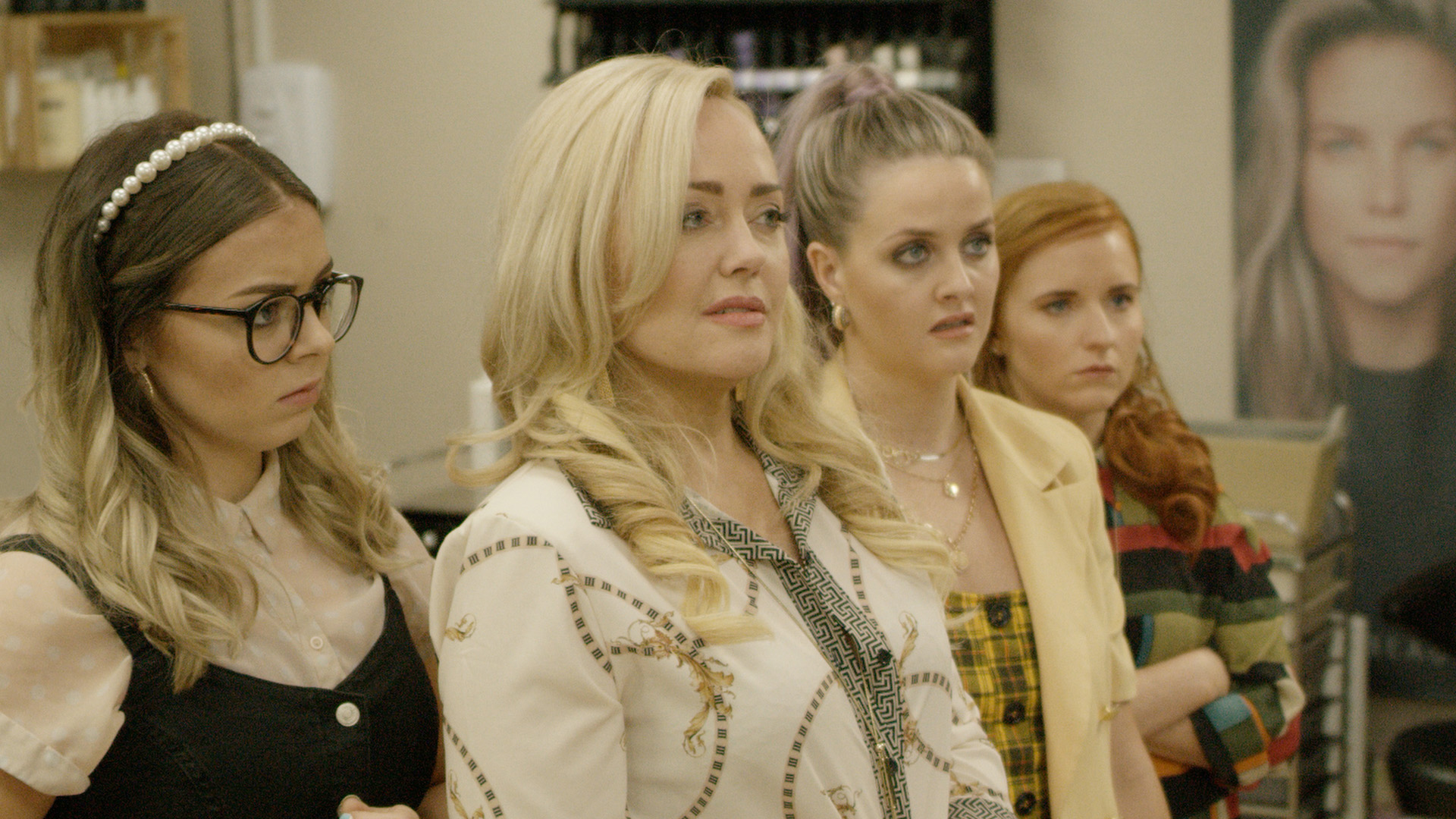
A gang rules over the North Dublin town of Piglinstown, Ireland. The town council would rather shut down the local shops than deal with the gang. The gang threatens the women of Piglinstown’s Deadly Cuts and vandalizes their salon, graffiting the walls and smashing the windows. However, the hairdressers won’t let anything dampen their spirits while preparing for the televised hairstyling competition “Ahh Hair”—even as they cut something very different.

Content warning: This article deals with topics of suicide.
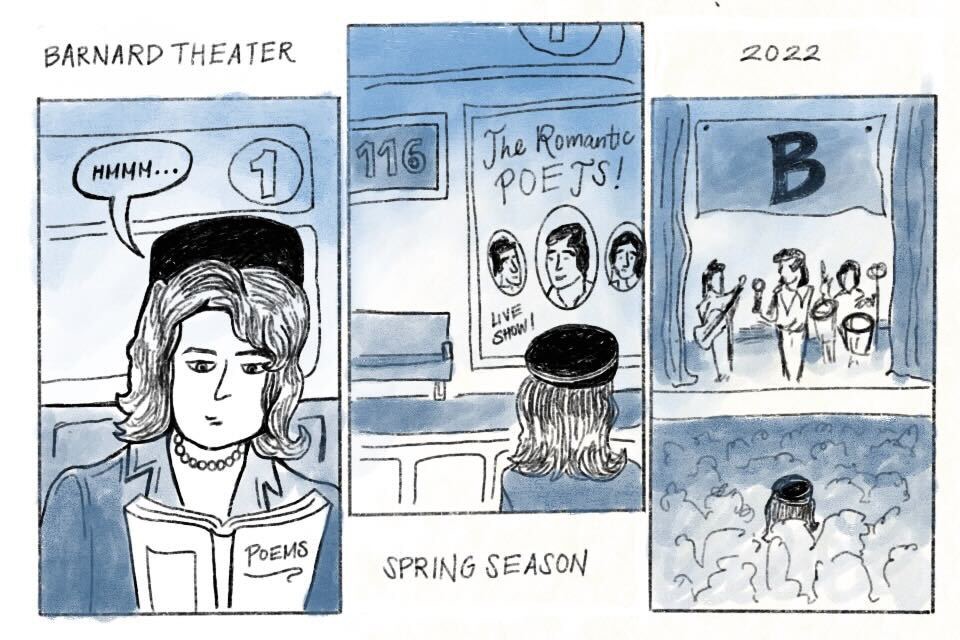
Review: Sexuality, subway rides, and Jackie Kennedy: A sneak peek of Barnard Theater’s spring season
To Barnard adjunct lecturer Lisa Rothe, the theater maker’s job is to reflect and hold up a mirror to human nature. This is the goal of Barnard’s upcoming theater season, which will stage four productions touching on longing, trauma, and the harsh realities of the creative process. And the first musical on the docket, Lisa Kron’s “Fun Home,” achieves this beautifully according to Rothe, the show's director.