

Irie Sentner
Editor in ChiefColumbia College Class of 2024
@iriesentner
irie.sentner@columbiaspectator.com
Latest articles

Following over a year of restricted campus access in an effort to curb the spread of COVID-19, Interim Provost Ira Katznelson announced that the University stands “on the cusp of restoring our campuses to vibrant density” in an email sent to the community on Thursday.
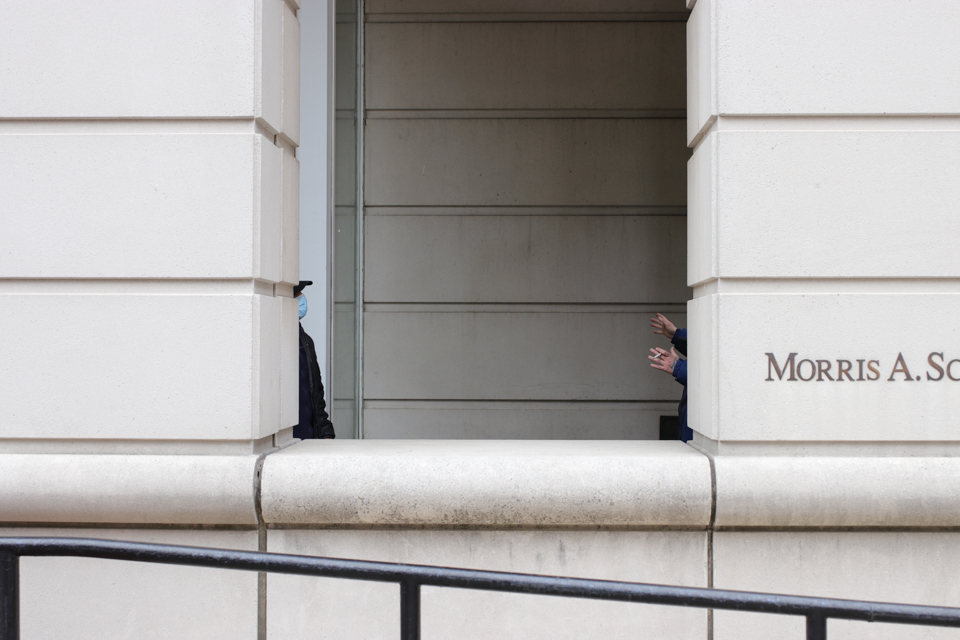
Columbia settled for $13 million in a class-action lawsuit over the management of its employee retirement plans six days before the case was set to go to trial. In Cates, et al. v. Trustees of Columbia University, et al., one of the first cases scheduled to go to trial in federal court in the Southern District of New York following the lockdown, the plaintiffs alleged that the University’s 403(b) retirement plan—the nonprofit version of a 401(k)—breached its fiduciary duties.
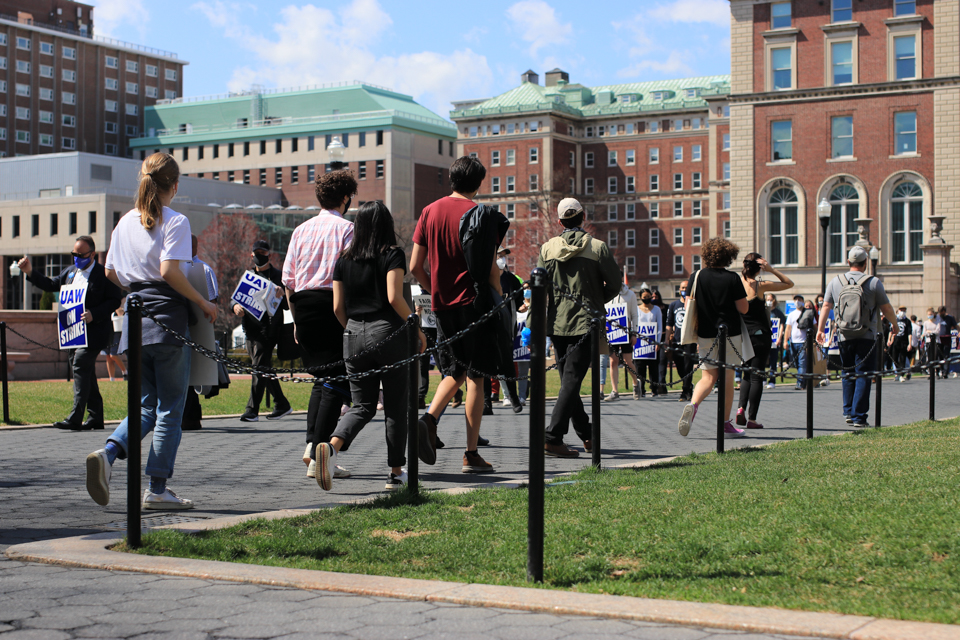
All 10 bargaining committee members of the Graduate Workers of Columbia-United Auto Workers have resigned, citing internal divisions following the failure of their tentative agreement and the conclusion of the strike.

“When I began this project, I expected to find something of the following: a revolutionary lineage of student activism culminating in a strike that was so impactful as to convince a dogmatic academic institution to change its long-set ways,” wrote Audrey Oh, CC ’21, as she reflected on her senior thesis project. “What I got is something much different.”

On Saturday, the Society of Professional Journalists announced the recipients of its 2021 Mark of Excellence Awards, which honor the best of collegiate journalism at the national level. Spectator, which submitted eight articles and its editions for consideration, won in three categories—including best all-around student newspaper—and had four finalists.
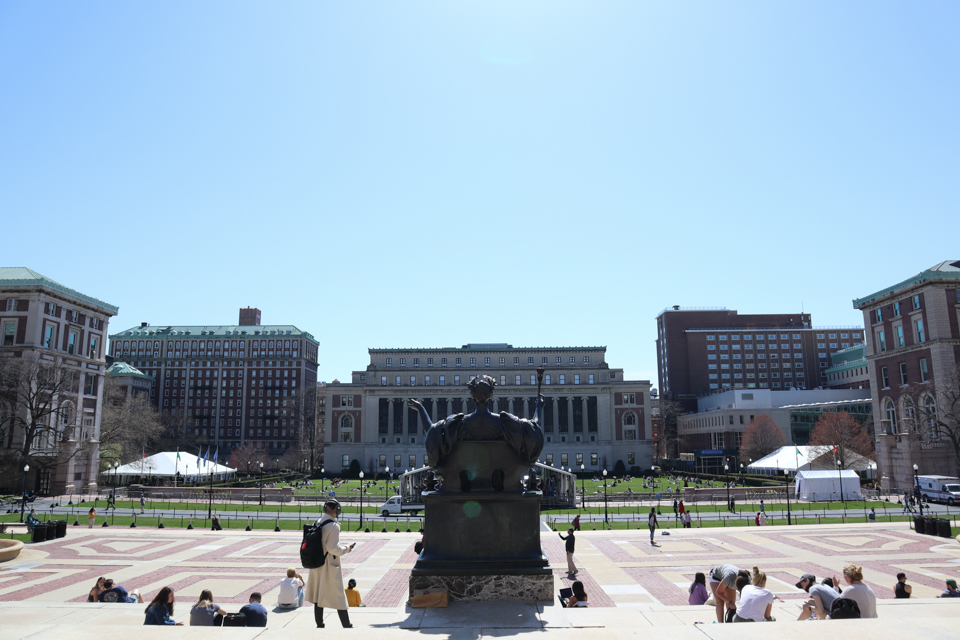
Columbia College and the School of Engineering and Applied Science have released offers of admission to 2,218 students, the office of undergraduate admissions announced on Tuesday, causing the acceptance rate to plummet to a record-low 3.66 percent. Admitted students come from all 50 states and 100 countries.

During the fifth day of the Graduate Workers of Columbia-United Auto Workers strike on Friday, March 19, a crowd gathered around the sundial to rally in support of the union’s demands for a fair contract. Lindsey Boylan, Business ’12, a candidate for Manhattan Borough President, spoke at the rally, not about the alleged sexual harassment she faced as a staffer for Gov. Andrew Cuomo, but instead about her experiences of harassment while she was a student at Columbia.

Every year in late March, all eight Ivy League universities simultaneously release undergraduate admissions decisions to tens of thousands of eagerly waiting high school seniors. For many, Ivy Day—as it has been dubbed by the admissions community—represents the end of a long, stressful, and taxing application process. With a single click, students’ dreams of attending the Ancient Eight either come true or are shattered.

In the face of luxury real estate development and rising rent prices, the Morningside Heights Community Coalition sent a memorandum to University President Lee Bollinger and several Columbia officials on Feb. 1, calling for the institution to preserve the rent-regulated units in its residential buildings as a source of affordable housing for the community. Local residents feel that the preservation of rent-regulated units is vital not only to provide much-needed affordable housing but also to maintain the neighborhood’s diversity and sense of community.

In honor of Black History Month, Spectator is publishing a series on notable Black alumni, scholars, activists, leaders, students, and more whose stories we wish to honor.