

Margaret Tilley
Latest articles

After the University transitioned to online learning, many seniors majoring in visual arts struggled to adapt their practices to home settings that lacked the equipment and studio space they relied on at Columbia.

Carola Dixon, CC ’20, had relied on Columbia’s desktop computers for months to work on her visual arts senior thesis, a film requiring heavy editing that she said her laptop could not handle. However, when the facilities that housed those desktop computers closed, Dixon was unsure how she could complete her film.

After a long day, Helen Reddy had just tucked her daughter into bed—a familiar, mundane task for the single mother and aspiring singer—when inspiration struck. She scrambled to her daughter’s desk, whipped out a notepad, and wrote without hesitation: “I am strong. I am invincible.” These words of affirmation would later become the lyrics of her hit song “I Am Woman,” which became an unofficial anthem of the women’s rights movement of the 1970s.

Spanning generations, genres, and backgrounds, the authors-turned-panelists at the “Coming to Barnard” talk on Feb. 20 had one essential trait in common: They were all first-generation college students at Barnard back in the day; or, as English professor Mary Gordon, BC ’71, put it more comically, “We are not of the group whose parents wrote our college essays for us.”
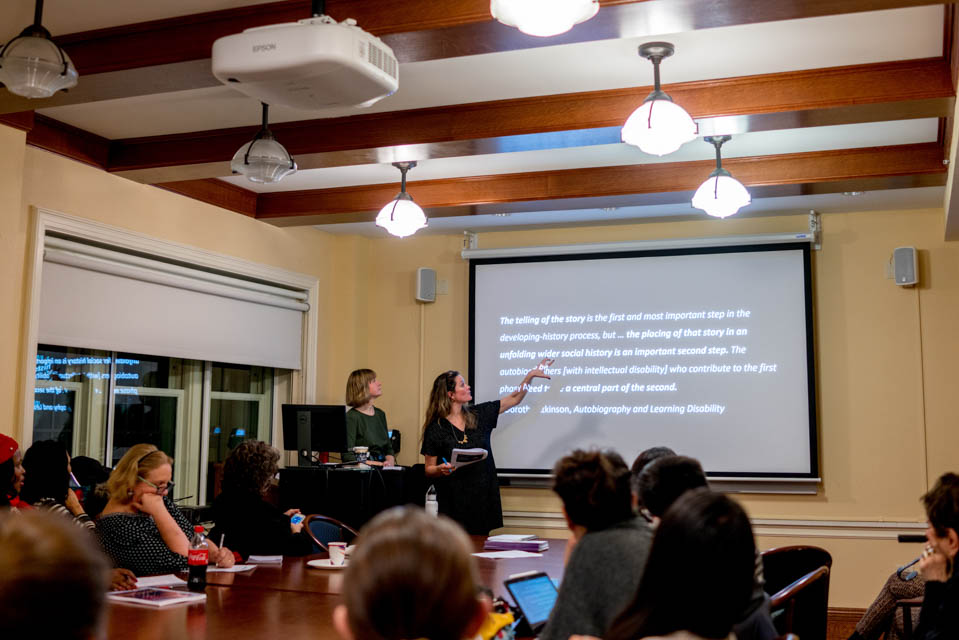
“Men are nothing but trouble!” Jennifer, a resident at Selinsgrove Center in Pennsylvania, exclaimed, inciting laughter from her interviewer and caregiver. Her interviewer had asked if she had found a boyfriend during her eight years at Selinsgrove, a live-in care institution for people with intellectual disabilities.

Art X Social Justice’s inaugural event, “Stories in Paper,” featured paper-based artwork made by incarcerated people. Through workshops led by art therapist Laura Betancur, the artists constructed pieces in a variety styles, which reflected a range of experiences.

As students pass between classes in Schermerhorn Hall, its eighth and ninth floors provide an artistic respite from endless bulletin boards overfilled with flyers. Students have the chance to see a number of art pieces created by incarcerated individuals, bringing their rarely-heard voices to Columbia’s campus.

The “Red Summer” of 1919 was marked by extreme racial violence, where white supremacists murdered and terrorized hundreds of black individuals across the United States. The Arthur Ross Architecture Gallery’s current exhibition, “1919: Black Water,” homes in on one of these homicides with paintings and sculptures by artist Torkwase Dyson.

Artist Yann Toma knows that tackling climate change can feel overwhelming in the face of the global scale of the crisis. He insists, however, that this perception is “only an image,” one which he brought to life in his new exhibit “Capitalocene.”

“You all would be amazed by the variety and the creative energy that [Barnard] students bring to their classes, no doubt facilitated by the three people we are going to hear from,” Barnard’s Director of Creative Writing Timea Szell said of the visiting faculty who were set to speak at the James Room in Barnard Hall.